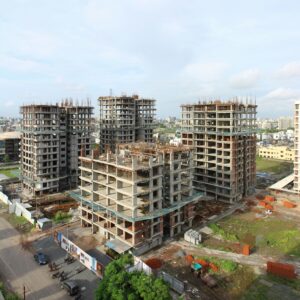
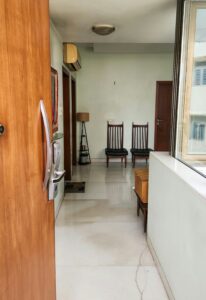
Homebuyers in India often compare prices using square-foot rates—yet those rates can mean different things depending on whether they’re quoted on carpet, built-up, or super built-up area. If you’ve ever wondered what is built up area in property, this guide explains the differences, how to calculate each, and why it matters for your budget and comparisons.
What is built up area in property?
Built-up area is the total area of your apartment measured to the exterior walls, typically including:
- Carpet (usable) area inside rooms
- Thickness of internal and external walls
- Private balconies, sit-outs, and often exclusive terraces attached to the unit
In developer brochures across India, built-up area is commonly larger than carpet area because it adds wall thickness and certain private outdoor spaces. However, it is not the legal basis for sale under the Real Estate (Regulation and Development) Act, 2016 (RERA). RERA mandates that apartments be sold on carpet area only, which is legally defined in the Act.
Carpet vs. built-up vs. super built-up: the differences
Carpet area (RERA-defined)
Carpet area means the net usable floor area within the apartment’s internal walls. It excludes areas under external walls, balconies, verandas, and open terraces, but includes the area covered by internal partition walls. See Section 2(k) of the RERA Act for the exact legal definition: The Real Estate (Regulation and Development) Act, 2016.
Built-up area (industry usage)
Built-up area ≈ Carpet area + wall thickness + private balconies/terraces. This figure is not standardized by law and can vary by developer practice and local norms. Always ask your developer or broker exactly what they include as built-up for a project.
Super built-up area (industry usage)
Super built-up area ≈ Built-up area + proportionate share of common areas (e.g., lobby, lift shafts, corridors, clubhouse portions). Builders sometimes quote price per sq ft on super built-up, which makes homes appear larger at a lower per‑sq‑ft price. Compare apples-to-apples by converting to carpet area where possible.
Quick formulas and an example
- Carpet area (legal): Net usable area inside the unit (includes internal partition walls only)
- Built-up area (typical): Carpet area + wall thickness + private balconies/terraces
- Super built-up area (typical): Built-up area + share of common areas (via a “loading” factor)
Worked example
- Carpet area: 750 sq ft
- Wall thickness + balconies: 150 sq ft
- Built-up area: 750 + 150 = 900 sq ft
- Common area loading (say 20% of built-up): 0.20 × 900 = 180 sq ft
- Super built-up area: 900 + 180 = 1,080 sq ft
In this example, a home marketed as “1,080 sq ft” might have only 750 sq ft of carpet (usable) area. To compare another project fairly, convert both to carpet area.
Why built-up area matters for buyers
Pricing transparency
Two flats with similar super built-up areas can have very different carpet areas due to high “loading.” A lower price per sq ft on super built-up can mask a smaller usable space. Ask for the carpet area and the loading percentage to make a clean comparison.
Home loans and subsidies
Banks typically finance based on sanctioned value, not a specific area metric. However, government housing subsidies (e.g., under PMAY-Urban) rely on carpet area caps for eligibility by income category. For example, carpet-area limits for the MIG category were increased under PMAY-Urban to expand coverage; see the Government’s press release: PIB: Enhancement of carpet area in MIG under CLSS. For current program details, refer to the official portal: PMAY-Urban.
Stamp duty and maintenance
Stamp duty is generally levied on the agreement value (subject to the circle rate/ready reckoner in your area). Since the agreement states carpet area under RERA, this improves transparency. Maintenance charges in many societies are often computed on super built-up or built-up area—confirm the basis with your association or developer.
How to verify and calculate your area
- Start with official documents. Your Agreement for Sale and RERA registration documents should clearly state the carpet area (as per the RERA definition). Cross-check with the sanctioned floor plan.
- Ask for the loading calculation. Request a breakdown showing carpet, built-up additions (walls/balconies), and the share of common areas to derive super built-up.
- Measure key rooms. On possession, verify room dimensions and usable spaces against drawings. Minor construction tolerances are common, but significant deviations should be addressed immediately.
- Clarify inclusions. Confirm whether exclusive terraces, flower beds, and utility balconies are counted in built-up and how. Practices can vary by city and project.
- Compare by carpet area. For negotiations and comparisons across projects, reduce all quotes to carpet area (and note the loading percentage) to judge true value.
Key regulations and buyer protections
- Sale by carpet area: RERA requires that apartments be sold on the basis of carpet area, improving comparability and reducing ambiguity. Read the legal definition in Section 2(k) of the Act: RERA Act (India Code).
- Project disclosures: State RERA portals host sanctioned plans, project details, and area statements. Use them to verify claims made in brochures.
- Dispute redressal: If significant deviations exist between promised and delivered carpet area or inclusions, escalate to your state’s RERA authority with documentary proof.
Conclusion
Understanding what is built up area in property—and how it differs from carpet and super built-up—helps you compare homes accurately, negotiate better, and avoid surprises at possession. Always anchor your evaluation on carpet area (the RERA-defined, legally binding metric), and use built-up and super built-up figures only for context once you know exactly what they include.
FAQs
1) Is built-up area legally defined under RERA?
No. RERA legally defines carpet area and mandates sale on that basis. Built-up and super built-up are industry terms; always confirm what’s included. See the Act text here: RERA Act.
2) Does built-up area include balconies and terraces?
Typically yes—built-up often includes wall thickness and private balconies. Exclusive terraces may or may not be counted depending on project policy; request a written breakup.
3) How do I convert super built-up to carpet area?
Ask for the loading factor. If super built-up = carpet × (1 + loading), then carpet = super built-up ÷ (1 + loading). Example: 1,200 sq ft at 25% loading → carpet ≈ 1,200 ÷ 1.25 = 960 sq ft.
4) Why do two flats with the same super built-up feel different in size?
Higher loading and thicker walls reduce usable space. Layout efficiency also matters—corridor-heavy designs shrink effective carpet area even at the same super built-up size.
5) What should I check at possession regarding area?
Verify the delivered carpet area and key room dimensions against the Agreement for Sale and sanctioned drawings. If deviations are material, document and escalate to your state’s RERA.