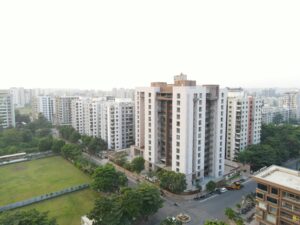
Maharashtra remains India’s most dynamic real estate investment destination, but the landscape has shifted dramatically from the speculative frenzy of previous years. After navigating RERA implementation, pandemic disruptions, and supply chain volatility, the market has matured into a more transparent, delivery-focused environment. The question isn’t whether to invest—it’s identifying the best place to invest in property in Maharashtra that offers genuine value beyond marketing hype.
From my decade-plus experience evaluating investment opportunities across Mumbai, Pune, and satellite cities, I’ve observed that 2026 represents a unique convergence point. Major infrastructure projects are transitioning from construction to operational phases, fundamentally altering accessibility and economic gravity. This isn’t theoretical growth—these are tangible catalysts that will determine which micro-markets deliver returns and which stagnate despite promotional noise.
Why 2026 Is a Crucial Year for Property Investment in Maharashtra
The timing matters more than most investors realise. 2026 marks the scheduled completion or substantial progress of several mega infrastructure projects that have been delayed for years. The Mumbai Trans Harbour Link (MTHL) is operational, cutting travel time between Mumbai and Navi Mumbai to 20 minutes. Navi Mumbai International Airport has commenced operations, creating an entirely new employment and connectivity ecosystem. Metro Phase III extensions in Mumbai and Pune’s metro network expansion are progressing beyond core routes into suburban catchments.
These aren’t incremental improvements—they fundamentally alter real estate investment equations. Properties that were previously considered peripheral suddenly become accessible. Employment hubs that relied on road connectivity now benefit from multi-modal transport options. I’ve watched similar transformations in Gurgaon post-metro and Bangalore post-airport, where early movers captured 60-80% appreciation within 3-5 years of infrastructure activation.
Demand recovery trends across residential segments show genuine end-user absorption rather than investor stockpiling. Post-pandemic preferences for larger homes, better amenities, and suburban living have created sustained demand in previously overlooked locations. Affordable housing Maharashtra segments in Tier-II cities are witnessing corporate employee migrations, not just speculative purchases. This fundamental demand provides downside protection that speculative markets lack.
Key Factors That Will Drive Real Estate Growth in Maharashtra (2026–2030)
Infrastructure Corridors & Mega Projects Impacting Property Values
The Delhi-Mumbai Industrial Corridor (DMIC) nodes in Maharashtra—particularly around Shendra-Bidkin near Aurangabad and Dighi in Pune—are transitioning from planning to execution. These aren’t just industrial zones; they’re catalysts for residential real estate, retail development, and service sector growth. Properties within 15-20 kilometres of these nodes typically appreciate ahead of the broader market once manufacturing units begin operations.
MTHL’s impact extends beyond travel time savings. It validates Navi Mumbai and Raigad district as genuine alternatives to Mumbai, not just satellite markets. Metro expansions in Mumbai (Colaba-Bandra-SEEPZ, Wadala-Thane) and Pune (Hinjawadi-Shivajinagar) create station-proximity premiums that weren’t relevant two years ago. I’ve consistently advised clients to prioritise properties within 800-metre walking radius of operational or under-construction metro stations—this proximity commands 15-25% premiums upon metro launch based on historical data from Delhi and Bangalore.
Employment Hubs, Industrial Clusters & IT Growth Zones
Commercial property development follows employment growth, and residential demand follows both. Pune’s Hinjawadi IT corridor continues expanding westward into Phases II and III, creating rental demand that supports residential real estate. Mumbai’s Bandra-Kurla Complex (BKC) and emerging business districts in Navi Mumbai (Belapur CBD, Airoli) drive demand for both luxury apartments and mid-segment housing within 30-45 minute commute zones.
Nagpur’s MIHAN SEZ and the emerging logistics hubs around Bhiwandi, Talegaon, and Chakan near Pune represent underappreciated growth drivers. These aren’t glamorous IT campuses, but warehousing and logistics facilities employ significant workforces requiring proximate housing. I’ve observed that industrial clusters often deliver more stable rental yields (3.5-4.5%) compared to purely residential suburbs (2.5-3.5%).
Government Policies, RERA Enforcement & Buyer Protection
Maharashtra’s RERA implementation has been among India’s most stringent. This enforcement creates genuine buyer protection but also means that only financially sound developers complete projects on schedule. From a practical standpoint, this reduces speculative supply and forces builders to focus on execution rather than launching multiple projects simultaneously. Investment hotspots Maharashtra now correlate with developer track records, not just location fundamentals.
The shift towards transparent project approvals, mandatory escrow accounts, and penalty provisions for delays has eliminated many fly-by-night operators. This consolidation benefits investors through reduced completion risk, but it also means premium pricing for reputed developers. An experienced builder in Bhandup Mumbai or experienced real estate developers in Mumbai command 10-15% premiums over lesser-known builders—premiums that are often justified by on-time delivery and quality construction.
Best Cities to Invest in Property in Maharashtra in 2026 (Ranked Analysis)
Navi Mumbai & Panvel – Infrastructure-Led Appreciation Hotspot
Navi Mumbai represents the best place to invest in property in Maharashtra in 2026 for investors seeking 5-7 year appreciation plays. The airport’s operational status, MTHL connectivity, and established social infrastructure create multiple growth catalysts converging simultaneously. Unlike Mumbai, where appreciation is constrained by already-elevated valuations, Navi Mumbai offers 40-60% lower per-square-foot rates with comparable infrastructure access post-MTHL.
Specific micro-markets merit attention. Ulwe offers affordable entry points (₹6,000-8,000/sq ft) with direct metro connectivity planned. Pushpak Nagar near Dronagiri benefits from port-related employment and improving road networks. Taloja’s industrial adjacency creates rental demand from factory workers and mid-management employees. Spacious township apartments in Panvel from established developers offer family-oriented living with schools, hospitals, and retail within gated communities—a combination that drives end-user demand rather than purely speculative interest.
The realistic expectation: 8-12% annual appreciation through 2030, with potential spikes post-metro completion. Rental yields currently range 2.5-3.2%, lower than CBD locations but improving as employment bases strengthen.
Pune & Peripheral Suburbs – End-User + Rental Stability
Pune balances appreciation potential with immediate rental income better than most Maharashtra cities. Hinjawadi’s IT concentration ensures consistent tenant demand, though supply saturation has moderated price growth. Wakad and Pimple Saudagar offer better value with metro connectivity under construction. Chakan’s automotive and industrial base creates blue-collar and white-collar housing demand simultaneously. Manjari on the eastern periphery represents emerging affordable housing Maharashtra segments with improving connectivity via ring roads.
The practical challenge: Pune’s market depth means liquidity varies dramatically by micro-market. Established areas sell within 3-6 months; peripheral locations require 8-12 months for exits. For long-term investors comfortable with 7-10 year holding periods, Pune’s fundamentals—employment diversity, educational institutions, climate preferences—provide downside protection that speculative markets lack.
Thane – Mature Market with Redevelopment Upside
Thane offers a different investment proposition: stable, mature markets with redevelopment opportunities rather than greenfield appreciation. Metro connectivity to Mumbai, established social infrastructure, and Thane’s emergence as an independent business district (not merely Mumbai’s suburb) support premium pricing that’s largely justified. Majiwada, Kolshet Road, and Ghodbunder Road represent established residential corridors with consistent demand.
The redevelopment angle matters for patient investors. Thane’s older housing societies qualify for redevelopment under various schemes, potentially offering 20-30% additional built-up area to existing owners. This isn’t quick money—redevelopment timelines stretch 5-8 years—but it provides appreciation potential even in markets with limited land availability.
Nagpur – Long-Term Growth Bet via MIHAN & Logistics
Nagpur represents Maharashtra’s longest-term play—not suitable for investors seeking 3-5 year exits but compelling for 10-15 year appreciation strategies. MIHAN’s Multi-modal International Hub status, central India’s logistics gateway positioning, and comparatively affordable entry points (₹3,500-5,500/sq ft for quality apartments) create asymmetric return potential.
The realistic constraint: liquidity. Nagpur’s market depth is substantially lower than Mumbai or Pune. Selling premium properties requires patience and correct pricing. However, rental yields (3.5-4.2%) exceed most other Maharashtra cities, providing income while waiting for appreciation. Digital connectivity improvements and emerging IT parks suggest Nagpur could replicate Pune’s trajectory from 15 years ago—a transformation that requires patience but delivers substantial returns to early movers.
Raigad, Karjat & Roha – Plot & Villa Investment Corridors
These locations cater to distinct investor profiles: second-home buyers, plot investors seeking land appreciation, and those betting on industrial expansion along the Mumbai-Goa highway. NA (non-agricultural) plots near Karjat and Khopoli offer appreciation potential as weekend home destinations, though liquidity remains constrained. Roha’s industrial growth linked to chemical and pharmaceutical manufacturing creates demand for worker housing and mid-segment apartments.
The due diligence requirement here is substantially higher. Land titles, NA conversion documentation, and development plan verifications are non-negotiable. I’ve encountered numerous cases where “investment plots” lacked proper NA status or faced CRZ (Coastal Regulation Zone) restrictions that prevented construction. Work with local legal experts before committing capital to these markets.
Best Micro-Markets vs Cities – Where Returns Are Actually Higher
City-core properties in Mumbai, Pune, and Thane offer liquidity and rental income stability but limited appreciation upside due to already-elevated valuations. Peripheral micro-markets connected by upcoming infrastructure projects consistently outperform city averages during infrastructure delivery phases, then moderate as the next set of peripheral locations emerges.
The trade-off is timing risk and liquidity constraints. Investing in Ulwe or Taloja before MTHL completion required tolerating 2-3 years of minimal price movement. Post-infrastructure activation, these micro-markets appreciated 40-60% within 24-36 months—substantially exceeding established areas. However, selling requires patience; buyer pools are smaller than in mature markets.
My practical framework: allocate 60-70% of real estate investment capital to established micro-markets with immediate rental potential and proven liquidity. Allocate 30-40% to emerging infrastructure-led corridors where appreciation potential justifies liquidity constraints and timing uncertainty.
What Type of Property Should You Invest in for 2026?
Apartments – Rental Yield & Exit Liquidity
Apartments in gated communities with amenities represent the most liquid residential real estate category. They attract both end-users and tenants, providing flexibility in exit strategies. The practical consideration: maintenance costs erode net rental yields more than investors anticipate. Budget 8-12% of rental income for maintenance, property taxes, and periodic repairs. Energy-efficient office buildings in emerging business districts offer commercial alternatives with 6-8% rental yields but require substantially higher capital outlays and longer tenant lock-in periods.
Plots & NA Land – High Appreciation, Higher Due Diligence
NA plots appreciate faster than constructed properties during growth phases but demand rigorous legal verification. Confirm NA status through revenue department records, not just developer assurances. Verify development plan designations—residential, commercial, or industrial zoning dramatically affects future value. Coastal areas face CRZ restrictions that limit construction permissions despite NA status.
The appreciation potential is real: well-located NA plots in Panvel, Karjat, and Alibaug periphery delivered 15-20% annual appreciation 2020-2024. However, exit liquidity depends entirely on market conditions and buyer appetite for land versus ready properties.
Villas & Second Homes – Lifestyle + Income Strategy
Weekend homes in hill stations (Lonavala, Mahabaleshwar) and coastal areas (Alibaug, Dapoli) serve dual purposes: personal use and short-term rental income. Post-pandemic demand for larger spaces and holiday homes has strengthened this segment. Realistic rental yields from holiday homes: 4-6% annually if managed professionally, though occupancy rates fluctuate seasonally.
The constraint: these are illiquid assets requiring specific buyer profiles. Selling requires 8-18 months typically, and pricing depends heavily on property condition and amenities rather than just location.
Expected ROI, Rental Yields & Holding Periods (Realistic Outlook)
Short-term expectations (1-3 years): 4-7% annual appreciation in established markets; potentially flat or marginal growth in speculative peripheral locations awaiting infrastructure completion. Rental yields: 2.5-3.5% in residential; 5-7% in commercial (city centres).
Medium-term expectations (3-7 years): 8-12% annual appreciation in infrastructure-led micro-markets post-project completion; 5-8% in established areas. This is when MTHL, metro extensions, and airport impacts materialise in property values.
Long-term expectations (7-10+ years): 10-15% CAGR in well-selected emerging corridors; 6-9% in mature markets. Appreciation typically materialises in spurts following infrastructure activation rather than linear annual increases. Patient capital captures these spurts; short-term investors often exit before value inflection points.
Risks, Limitations & Common Investor Mistakes in Maharashtra
Over-dependence on promised infrastructure represents the primary risk. I’ve watched investors buy properties banking on metro lines that were delayed 5-8 years beyond original schedules. Infrastructure timelines in India are uncertain; budget for delays when modelling returns.
Legal risks with land purchases, particularly in coastal and peripheral areas, remain significant despite RERA. Always verify documentation through independent legal counsel, not developer-provided lawyers. CRZ violations, disputed titles, and development plan mismatches can render properties unsaleable or unbuildable.
Overpriced “hot” locations nearing saturation represent a subtler risk. When media coverage peaks and everyone identifies a location as the “next big thing,” early appreciation has often already occurred. Buying established properties in Hinjawadi or BKC at current rates offers stability but limited upside compared to identifying the next Hinjawadi before consensus forms.
Legal & Regulatory Checklist Before You Invest
Verify project registration on MahaRERA website—confirm developer credentials, project approvals, and completion timelines. Check for penalty notices or buyer complaints listed on the portal.
For land purchases, confirm NA conversion through 7/12 extracts and property cards from the revenue department. Verify development plan designations through local municipal corporation or gram panchayat offices. Coastal properties require explicit CRZ clearance verification—assume restrictions exist unless documentation proves otherwise.
Title checks must trace ownership 30+ years back, confirming clear title chain and absence of encumbrances, litigation, or disputed claims. This due diligence costs ₹15,000-40,000 depending on property complexity but prevents catastrophic losses from defective titles.
Who Should Invest Where? (Investor Persona Guide)
First-time buyers: Prioritise established areas with proven social infrastructure and rental potential—Thane, Pune suburbs, or Navi Mumbai sectors with operational amenities. Avoid peripheral plots or under-construction mega-projects where completion risks and timeline uncertainties exceed risk tolerance.
Long-term investors (7-10+ year horizons): Emerging infrastructure corridors like Ulwe, Taloja, Nagpur’s MIHAN periphery, or Pune’s eastern suburbs offer asymmetric return potential. Accept liquidity constraints and timing uncertainty in exchange for higher appreciation probability.
NRIs: Favour properties from experienced real estate developers in Mumbai or Pune with strong track records and transparent financial practices. Prioritise locations with rental demand to avoid holding vacant properties. Avoid land investments where ongoing legal monitoring is impractical from overseas.
High-net-worth investors: Consider commercial properties in emerging business districts, villa plots in premium locations, or redevelopment opportunities in mature markets. These segments offer portfolio diversification and potentially superior risk-adjusted returns compared to standard apartments.
Final Verdict – Best Place to Invest in Property in Maharashtra in 2026
For balanced risk-return profiles, Navi Mumbai and Panvel emerge as the best place to invest in property in Maharashtra in 2026. Infrastructure delivery timelines, affordable entry points relative to Mumbai, and employment growth projections converge favourably. Specific recommendations: spacious township apartments in Panvel from reputed developers for end-user buyers; NA plots near Ulwe or Taloja for long-term appreciation plays; commercial properties near Navi Mumbai Airport for income-focused investors.
Pune offers superior rental stability for investors prioritising immediate income over aggressive appreciation. Nagpur represents the long-term contrarian bet—substantial patience required but potentially rewarding for 10-15 year holders. Thane and Mumbai proper suit investors seeking stable, liquid assets with modest appreciation potential rather than high-growth plays.
The fundamental principle: align investment choices with personal timelines, risk tolerance, and liquidity requirements. Maharashtra’s urban growth areas offer genuine opportunities, but success depends on realistic expectations, rigorous due diligence, and patience to hold through infrastructure delivery cycles rather than speculative flipping strategies.
Also Read:
Different Types of Land in India (Complete Classification Guide)
What Is the Future of Real Estate in Mumbai?
Condominium Under the Maharashtra Apartment Ownership Act (MAOA)
FAQs
1. What is the best place to invest in property in Maharashtra in 2026?
Navi Mumbai and Panvel stand out in 2026 due to operational infrastructure like MTHL and the new airport. These areas offer lower entry prices than Mumbai with strong long-term appreciation driven by jobs, connectivity, and end-user demand.
2. Is 2026 a good time to invest in the Maharashtra property market?
Yes, 2026 aligns with major infrastructure projects becoming operational, improving accessibility and demand. This phase typically marks the start of value appreciation cycles, making it suitable for investors with a 5–10 year horizon.
3. Which city in Maharashtra offers the best balance of ROI and rental income?
Pune offers a strong balance of rental stability and moderate appreciation. IT hubs like Hinjawadi and Wakad provide consistent tenant demand, making Pune ideal for investors seeking regular income with lower volatility.
4. Are emerging areas like Panvel and Ulwe safe for property investment?
Panvel and Ulwe are considered relatively safe when investing in MahaRERA-registered projects by reputed developers. Investors should still verify approvals, infrastructure timelines, and legal documentation to reduce execution and delay risks.
5. Should I invest in apartments or plots in Maharashtra in 2026?
Apartments offer better liquidity and rental income, while NA plots can deliver higher appreciation over time. The right choice depends on your risk tolerance, holding period, and ability to manage legal due diligence for land purchases.
6. How has MahaRERA improved property investment safety in Maharashtra?
MahaRERA enforces project registration, escrow of buyer funds, and penalties for delays, improving transparency. This reduces completion risk and helps buyers assess developer credibility before investing in a project.
7. What are the biggest risks when investing in property in Maharashtra?
Key risks include delays in promised infrastructure, legal issues with land titles, and buying into overhyped locations. Investors should plan for longer holding periods and rely on verified data rather than marketing-driven projections.