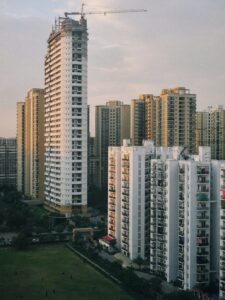
Are property prices going down in Mumbai? It’s the question many homebuyers and investors are asking as they weigh purchases in India’s most expensive housing market. Based on the latest publicly available indicators and credible research, broad-based price declines have not materialized. Instead, the Mumbai housing market shows resilience, with micro-market variations and a slower pace of appreciation compared to the 2021–2023 surge.

Are property prices going down in Mumbai in 2026?
In short: widespread price drops are unlikely in 2026 unless there is a sharp demand shock. Indicators from government-backed price indices and industry research show steady-to-moderate growth in asking prices alongside strong sales momentum in key corridors. While selective corrections can occur in over-supplied pockets or in projects facing delivery delays, the overall trajectory remains stable.
What the latest data shows
- Official price indices remain firm: The National Housing Bank’s RESIDEX tracks city-level housing prices, including Mumbai, and has signaled sustained momentum post-2022. The Reserve Bank of India’s city indices within its House Price Index series have also shown year-on-year increases across major metros in recent quarters, reflecting sticky prices rather than declines.
- Registrations and sales are healthy: Property registrations in Mumbai—reported by the Inspector General of Registration, Maharashtra—have remained elevated since 2022, indicating steady end-user and investor activity. Strong registrations tend to correlate with stable pricing.
- Industry research corroborates the trend: Leading consultancies continue to report robust launches and sales in the Mumbai Metropolitan Region (MMR), particularly in the mid-income and upper-mid segments. See the India research hubs at Knight Frank and ANAROCK for periodic market updates.
Why prices are resilient
- End-user demand and incomes: Post-pandemic job stability in services and BFSI has supported upgrades from rentals to ownership, especially in western and central suburbs.
- Constrained supply in core locations: Redevelopment-led supply takes time. Delay-prone approvals and construction constraints limit rapid inventory expansion in prime micro-markets.
- Infrastructure tailwinds: Ongoing metro corridors and road connectivity improvements by MMRDA are shortening commutes, sustaining demand in emerging nodes.
- Financing conditions: While home loan rates rose from pandemic lows, policy has stabilized. Monitor the RBI Monetary Policy for rate direction, which influences affordability and sentiment.
Mumbai property price trends by segment and location
There is no single “property rates in Mumbai today”—pricing varies sharply by product, location, and stage of construction. Broadly:
- Luxury and premium (South Mumbai, BKC-adjacent, prime coastal belts): Limited new supply and brand-driven demand keep prices firm. Resale liquidity is selective; unique sea-view or large-format units command premiums.
- Upper-mid and mid-income (Western/Central suburbs like Andheri, Goregaon, Powai, Chembur): Healthy absorption, with buyers prioritizing connectivity, amenities, and developer credibility. Prices tend to see gradual appreciation, with occasional negotiation room in older inventories.
- Peripheral growth corridors (Mira Road–Bhayandar, Kalyan–Dombivli, Navi Mumbai nodes): Competitive pricing with frequent new launches. Ticket sizes are lower, but price movements can be more sensitive to supply, construction progress, and infrastructure timelines.
- Under-construction vs. ready-to-move: Under-construction homes may offer payment-linked plans and launch benefits; ready units carry a premium for certainty of possession.

Mumbai real estate market forecast: 2026 scenarios
Here’s a data-informed, scenario-based Mumbai real estate market forecast that aligns with recent trends from official indices and industry trackers:
- Baseline: Prices remain stable to moderately higher in 2026, with stronger gains in well-connected suburbs and limited-supply micro-markets. Sales stay healthy; launch activity continues, skewed to mid and upper-mid segments.
- Downside: If mortgage rates rise or macro growth slows, absorption could soften, leading to time-corrections (longer selling cycles) and selective price cuts—most likely in over-supplied peripheral pockets or projects with execution delays.
- Upside: If rates ease and major infrastructure milestones improve commute times materially, demand could accelerate, lifting prices faster in nodes benefiting directly from new lines and interchanges.
What this means for buyers and investors
- Track credible price benchmarks: Use government-backed indices such as NHB RESIDEX for Mumbai to gauge direction, rather than relying only on asking prices. Cross-check with quarterly research updates from Knight Frank and ANAROCK.
- Validate demand using registrations: Review monthly data and circulars from the Inspector General of Registration, Maharashtra to understand market momentum.
- Price discovery for “property rates in Mumbai today”: Compare multiple listings, visit site sales offices, and consider independent broker opinions. Adjust for floor, view, car parks, possession timeline, and developer reputation.
- Assess project risk: Prioritize RERA-registered projects and scrutinize approvals, escrow practices, and construction progress. Check updates on the state regulator’s portal (MahaRERA).
- Financing strategy: Monitor the RBI policy stance; secure loan pre-approvals to move quickly on negotiated opportunities. Fixed/floating mix can help manage rate risk.
Conclusion: are property prices going down in Mumbai?
Taking the weight of official indices, registration trends, infrastructure upgrades, and industry research together, Mumbai is not experiencing broad-based price declines as of 2026. Expect a market characterized by micro-market divergence: resilient pricing in well-connected, supply-constrained locations; competitive pricing and negotiation headroom where supply is ample. For most buyers, timing the market is less important than buying the right home, at the right price, with clear approvals—backed by data.
FAQs
Will interest rate cuts make Mumbai homes cheaper in 2026?
Rate cuts typically improve affordability and can boost demand. Rather than lowering prices, they often reduce negotiations and shorten selling cycles, especially in sought-after micro-markets.
Which Mumbai micro-markets are most likely to see price corrections?
Over-supplied peripheral pockets or projects with execution delays are more vulnerable. Prime, supply-constrained areas tend to hold prices better.
How can I track property rates in Mumbai today with reliable data?
Use government-backed benchmarks like NHB RESIDEX for trend direction, cross-check with leading consultancy reports, and compare on-ground quotes from multiple developers and brokers.
Are new launches in 2026 likely to bring down prices?
New supply can cap rapid price increases, but developers price to input costs and demand. Expect competitive offers and payment plans rather than across-the-board price cuts.
Is 2026 a good time to buy in the Mumbai housing market?
If you find a clear-title, RERA-compliant home that fits your budget and needs, 2026 is reasonable. Focus on total cost, possession certainty, and connectivity rather than trying to time the absolute bottom.