Is it advisable to buy property in Mumbai? If you’re weighing this decision, you’re not alone. India’s financial capital attracts end-users and investors alike, but the right call depends on market fundamentals, your time horizon, and risk appetite. This guide offers a balanced Mumbai property market analysis, practical steps for buying home in Mumbai, and grounded Mumbai real estate advice backed by credible sources.

Is it advisable to buy property in Mumbai? Key factors to weigh
Answering the question “should I buy property in Mumbai” starts with fundamentals:
- Enduring demand drivers: Mumbai’s status as India’s financial hub (banking, markets, media, tech services) supports steady end-user demand. India’s urbanization trend continues to rise, adding to long-run housing needs. See the World Bank’s data on India’s urban population share for context: World Bank.
- Price resilience and transparency: Long-term price trends for major Indian cities, including Mumbai, can be tracked via the National Housing Bank’s NHB RESIDEX, which improves market transparency and benchmarking for buyers and investors. Explore the index here: NHB RESIDEX.
- Infrastructure pipeline: Transport upgrades across the Mumbai Metropolitan Region (MMR)—including metro corridors and arterial road projects—can shift micro-market dynamics and commute times. Project details and updates are published by the Mumbai Metropolitan Region Development Authority: MMRDA.
- Regulatory safeguards: The Real Estate (Regulation and Development) Act (RERA) enhances disclosure, escrow norms for under-construction projects, and buyer recourse. Maharashtra’s portal offers project and promoter details: MahaRERA.
Mumbai property market analysis: how to read the landscape
Micro-markets and price bands
Mumbai is a patchwork of distinct sub-markets with very different price points and demand profiles:
- South Mumbai and prime core: Ultra-prime, low new supply, strong capital preservation characteristics, but high entry cost.
- Western Suburbs (Bandra–Andheri–Borivali) and Eastern Suburbs (Ghatkopar–Mulund): Deep end-user demand, varied ticket sizes, and strong rental catchments near business districts and transport corridors.
- Greater MMR (Thane, Navi Mumbai, Kalyan-Dombivli, etc.): Generally more affordability and larger units per rupee, with value linked to commute connectivity and job hubs.
Ready vs under-construction
- Ready-to-move: Lower execution risk and immediate use/rental. Pricing premium is common in established micro-markets.
- Under-construction: Typically lower entry price and staged payments, but exposure to delivery timelines. Use MahaRERA to verify approvals, escrow compliance, and possession dates.
End-user vs investor lens
- End-users: Prioritize commute, school/healthcare proximity, and society quality. Focus on livability over short-term price moves.
- Investors: Concentrate on micro-market supply pipelines, rental demand, and 5–10 year infrastructure catalysts. Reference NHB RESIDEX for trend benchmarking rather than short-term speculation.
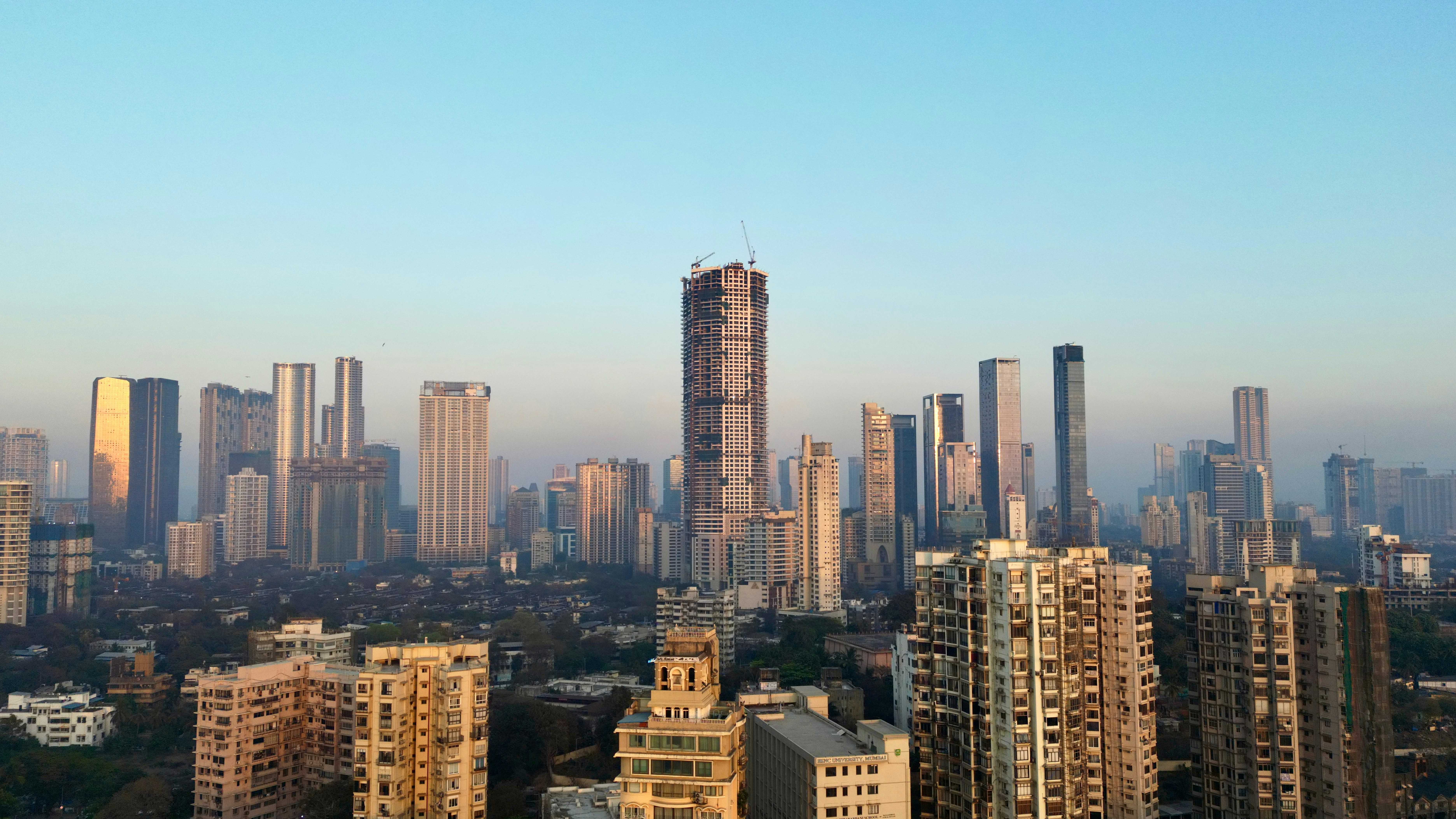
Advantages of buying property in Mumbai
- Depth of demand: A large, diversified economy underpins steady owner-occupier and rental demand, supporting long-term stability.
- Capital preservation in prime pockets: Blue-chip neighborhoods often show resilience through cycles, aided by limited supply and brand equity.
- Strong rental ecosystems: Multiple job corridors create reliable tenant pools, particularly near transit nodes and employment hubs.
- Liquidity vs other Indian cities: Transaction volumes in established micro-markets can be comparatively higher, aiding exit visibility for standard ticket sizes.
- Regulatory and data visibility: RERA disclosures and city-level price indices (e.g., NHB RESIDEX) improve buyer diligence.
Key risks (and how to mitigate them)
- High acquisition costs: Factor in stamp duty, registration charges, GST (where applicable), floor-rise premiums, parking, and society charges. Build a 10–12% buffer over base price to estimate total outlay conservatively.
- Project execution risk: For under-construction assets, verify MahaRERA registration, escrow compliance, stage-wise approvals, and the developer’s delivery track record.
- Micro-market oversupply: Study upcoming supply around your target micro-market and absorption patterns. Prioritize projects with strong end-user appeal, transit access, and day-to-day conveniences.
- Environmental and location-specific risks: Assess flood-prone zones, building elevation, drainage, and society maintenance practices; favor projects with robust infrastructure and disaster readiness.
- Financing and rate sensitivity: Home loan affordability depends on rates and your income stability. Review policy updates and lender rates before committing; the Reserve Bank of India’s site offers official communications: RBI.
Buying home in Mumbai: a practical 9-step checklist
- Define intent and horizon: End-use (minimum 7–10 years) vs investment (5–10 years) will shape asset choice.
- Fix a budget and get pre-approval: Obtain a lender pre-sanction to understand eligibility and improve negotiation leverage.
- Shortlist micro-markets: Prioritize commute time, infrastructure plans (check MMRDA), rental demand, and social amenities.
- Verify title and encumbrances: Use Maharashtra’s registration and stamps portal for public records and due diligence steps: IGR Maharashtra.
- Check MahaRERA details: Confirm project registration number, approvals, possession timeline, and quarterly updates: MahaRERA.
- Builder diligence: Study past project deliveries, financial strength, litigation history, and society feedback from earlier handovers.
- Total cost calculation: Include taxes/fees, interiors, maintenance deposits, floor-rise and parking charges, broker fees, and buffer for unforeseen costs.
- On-ground assessment: Visit at peak traffic and monsoon times; evaluate noise, air quality, water pressure, lift capacity, and society rules.
- Exit and rental plan: If investing, model conservative rent, expected vacancy, and holding costs; test multiple exit scenarios.
Conclusion: So, should I buy property in Mumbai?
In sum, is it advisable to buy property in Mumbai? Yes—if you’re choosing a micro-market aligned to your needs, budgeting prudently for total costs, and relying on data-backed diligence through NHB RESIDEX, MahaRERA, and IGR Maharashtra. End-users with long horizons and investors focused on transit-linked neighborhoods and sound developers can still find compelling opportunities. If your decision hinges on short-term price moves or stretched affordability, consider waiting, improving eligibility, or exploring value pockets across the wider MMR while you monitor fundamentals and infrastructure milestones.
FAQs
1) Is renting smarter than buying in Mumbai right now?
It depends on your horizon and stability. If you plan to stay fewer than 5–7 years, renting may be more flexible and cost-effective after accounting for transaction costs. For longer horizons, buying can lock in housing costs, build equity, and reduce relocation risk—especially in well-connected micro-markets.
2) How do I verify a Mumbai project’s legal and regulatory status?
Check the project’s MahaRERA registration for approvals, escrow details, and possession timelines, and review public records on the IGR Maharashtra portal for title/encumbrance checks. Consider hiring a real estate lawyer for chain-of-title and society documentation review.
3) Which micro-markets offer better value for first-time buyers?
Areas with improving connectivity (near metro lines or arterial roads) and good social infrastructure typically offer value. Compare Western/Eastern Suburbs and selected MMR nodes by commute time, developer quality, and liveability rather than headline price alone.
4) Are under-construction homes in Mumbai too risky?
Under-construction properties carry timeline risk, but RERA escrows and disclosures help. Mitigate by choosing reputed developers, verifying MahaRERA details, and aligning possession schedules with your personal plan. Price advantages can be meaningful if you can tolerate execution timelines.
5) What costs beyond base price should I budget for in Mumbai?
Plan for stamp duty and registration fees, GST if applicable, floor-rise premiums, parking, club/society charges, maintenance deposits, brokerage, and interiors. A conservative buffer over base price helps prevent cash-flow surprises at closing.